- The Productive Disruptive
- Posts
- When Public Health Talks, but Nobody Listens
When Public Health Talks, but Nobody Listens
Every Tuesday, The Productive Disruptive delivers storytelling science, message makeovers, cultural commentary, and a little rebellious hope for anyone still stubborn enough to believe communication can change the world.

Dorian Johnson
June 03, 2025

Did a wise PHriend forward this to you? [Subscribe here.]
A word about Public Health and Social Impact folk…
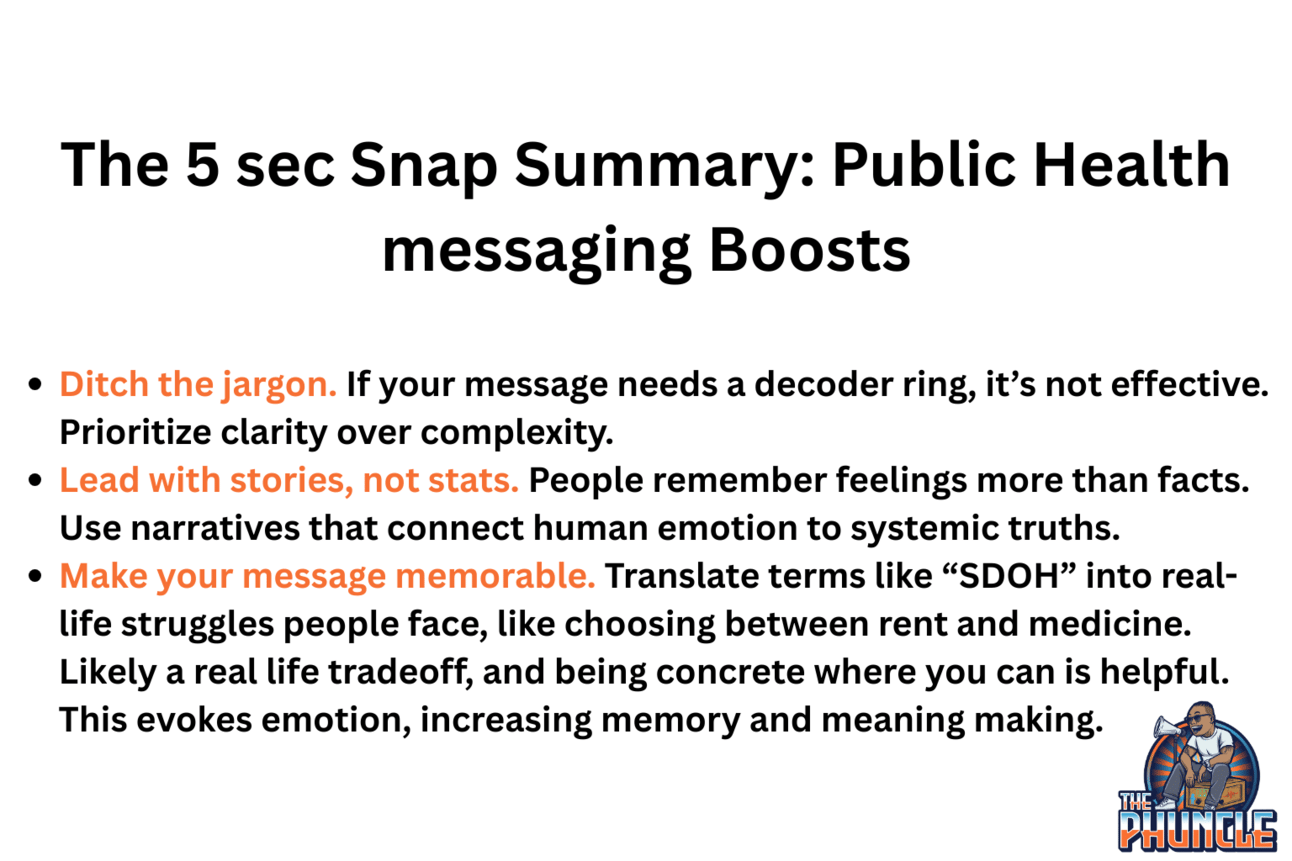
We are intelligent informers wanting to increase our impact, and yet somehow, we out here communicating like the Charlie Brown teacher

We have good stuff to say, of course. But what is being received?
Not good.
We speak in outputs, not outcomes.
In “social determinants of health” instead of rent’s too damn high, which brings impossible choices like “food or medicine?”
We drop frameworks, but forget to frame up communications.
And that’s a problem.
Because:
🧊 Cold facts don’t warm hearts.
🧠 Audiences needing a decoder to try and understand what you’re saying is cognitively exhausting (they’ll likely tune out, and an opportunity to connect will be missed).
📣 And when our messages don’t connect… Rumors and falsehoods enjoy a luxury trip into the brains of the public opinion.
Do I even gotta say, just look at the state of America today?
If Bernie Mac were here, he’d have some wordssssss.

Bonus storytelling Prompt: How would you explain the absurdity of American going ons to a 6 year old?
Also, not good.
So, we’ve identified a problem: Public Health communication needs work. Public Health is invisible. I truly feel these problems are related..
But whatever can we do? Let’s shift into solution mode😎
Enter: Storytelling
Ever heard a song and feel like, “Oh wow, that’s my whole life in 3 minutes?”
That’s storytelling in practice.
It’s not just telling what happened.
It’s making someone feel it.
It's building a bridge between what an expert knows and (in this case,) a listener can see, hear, feel, imagine, and more…
🧠 Story Science Side Note: When you tell a vivid story, the listener’s brain can actually “sync” with your teller brain. It’s called neural coupling. Basically, listener brain starts firing as if they're living it. Great for empathy building.
Oftentimes, you don’t even need to experience firsthand what 👀looks at current Billboard Hot 100 #1 song is👀
Kendrick Lamar is speaking on…
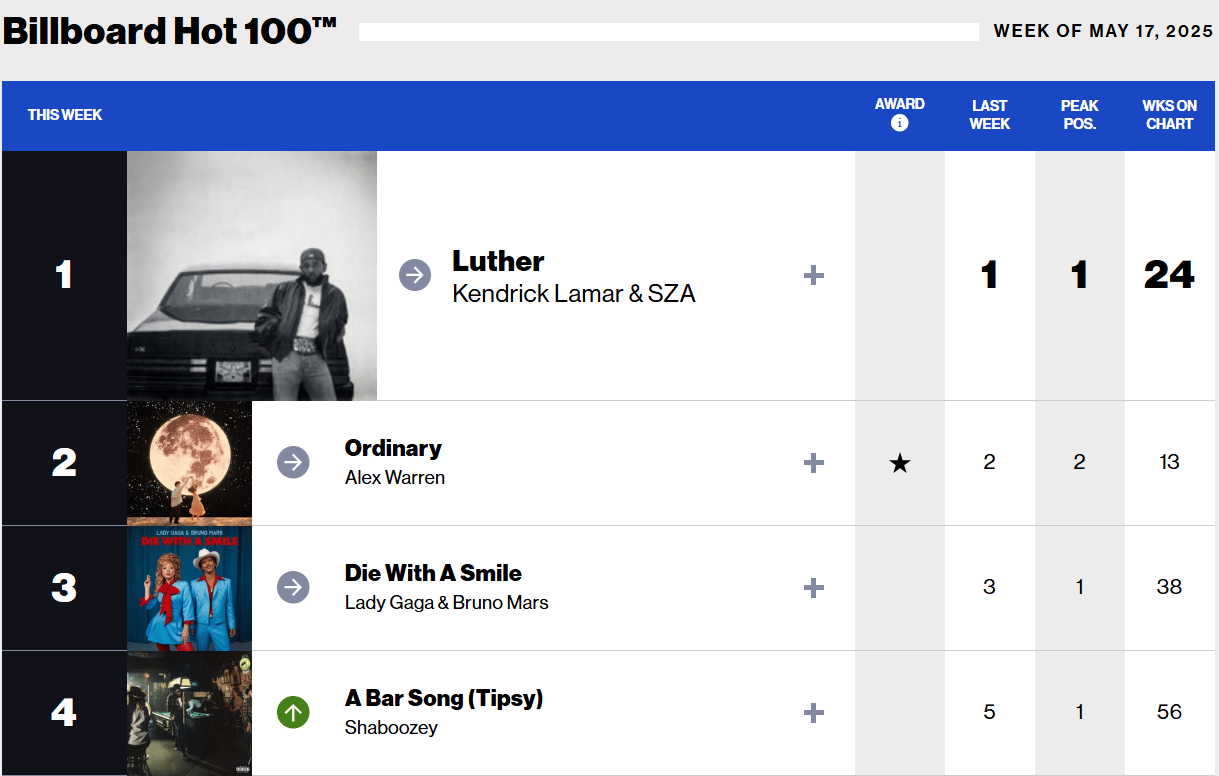
Take any of these songs. You can feel something vicariously. Public Health can learn from this.
Storytelling is how we:
Translate complex truths into lived realities
Make invisible systems visible
Turn ideas into concrete things people actually care about
But we don’t just need better storytelling techniques.
We need better stories rooted in real stakes, human faces, shared struggles, and possible futures.
Because if we the good people don't tell better stories...
🚨 The opps (opposition) will.
And will their stories center justice, equity, or truth?
I mean, there’s concerted efforts to slurify(now a verb) DEI, so I‘m betting no.
Back in proper context… The goal isn't to win a storytelling contest.
The goal is to win buy-in, attract attention, and create the chance to change what's possible and do good.
Imagine public health and other social impact change agents making people feel what a well-written song gives:
At community meetings,
On TikTok,
At the dinner table
Or wherever…
I mean, as we always say, “meeting people where they’re at”. That’s deadass, a literal instruction(I’m from NY).
There lies the opportunity.
And people will remember a well-told story long after the slideshow ends.
📝 Message Makeover: Social determinants of health” is useful for us. It gives Public Health a shared language. But to a nonexpert? Can get clunky.
Do they really need to know the term? Or do they just need to know how much money you make, and where you live, can make your health worse or better(and that these are connected).
Clinicians don’t tell patients upon examiniation, it’s determined you have “lateral epicondylitis”
“Girl, you got tennis elbow. Here’s how to take care of it”
We can learn from that.
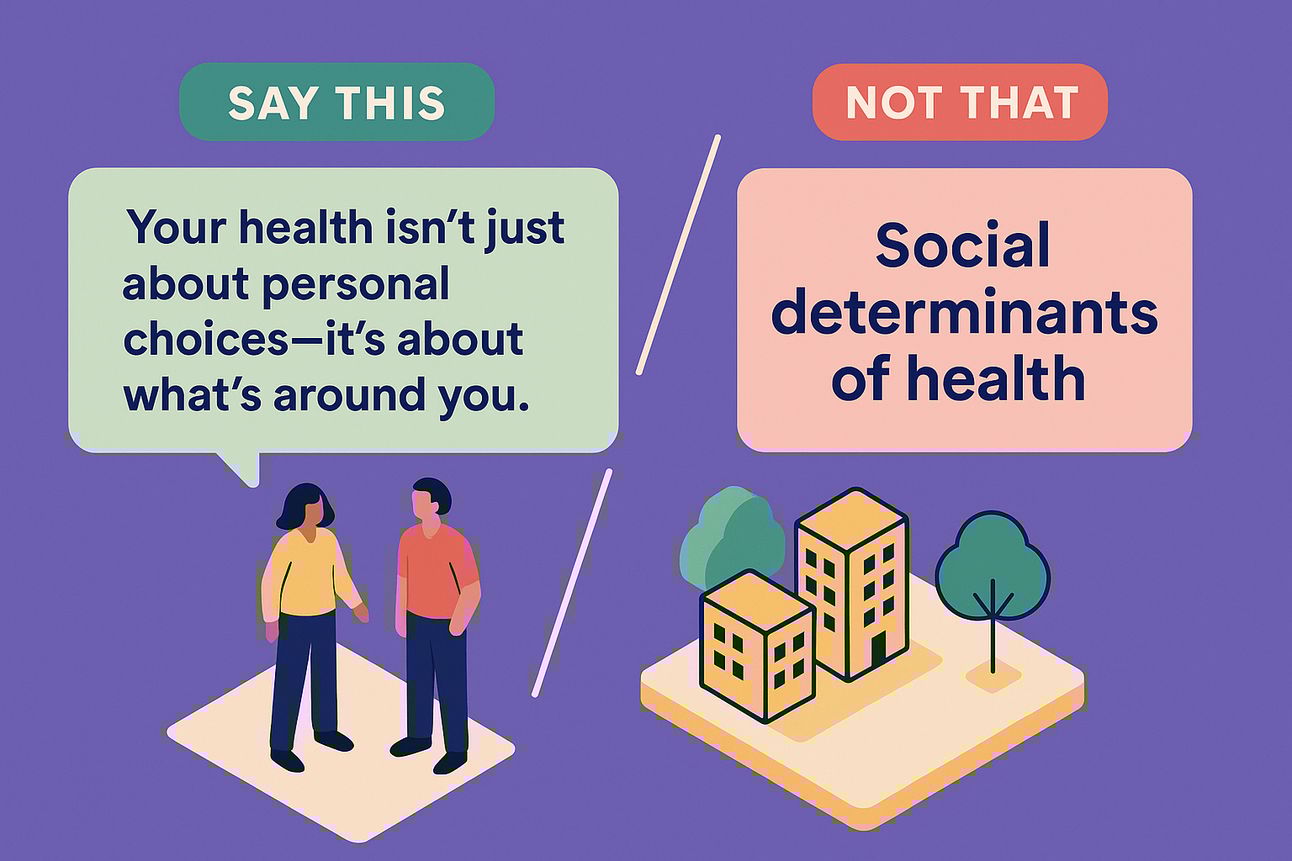
Saying this can open the door to explaining the different social determinants, such as education, income, housing, etc but capture attention first and make it relevant and understandable.
🛠️ The PHacilitator’s Corner:
Try This Storytelling Prompt: Think back to a moment in your work where a decision or a delay had real-life consequences.
What happened? Who did it impact? What would you say to that person if they were sitting next to you right now?
That’s the story.
Not the data point. Not the slide.
The human moment (Data can support the story, but lead with the story)
Based on that living, breathing example, what’s one way you might adjust telling your first(or next) story?
Keep spinning dem yarns y’all.
Bye for now!