- The Productive Disruptive
- Posts
- Say It Sharper
Say It Sharper
Every Tuesday, The Productive Disruptive delivers storytelling science, message makeovers, cultural commentary, and a little rebellious hope for anyone still stubborn enough to believe communication can change the world.

Dorian Johnson
April 07, 2026
Did a wise PHriend forward this to you? [Subscribe here.]
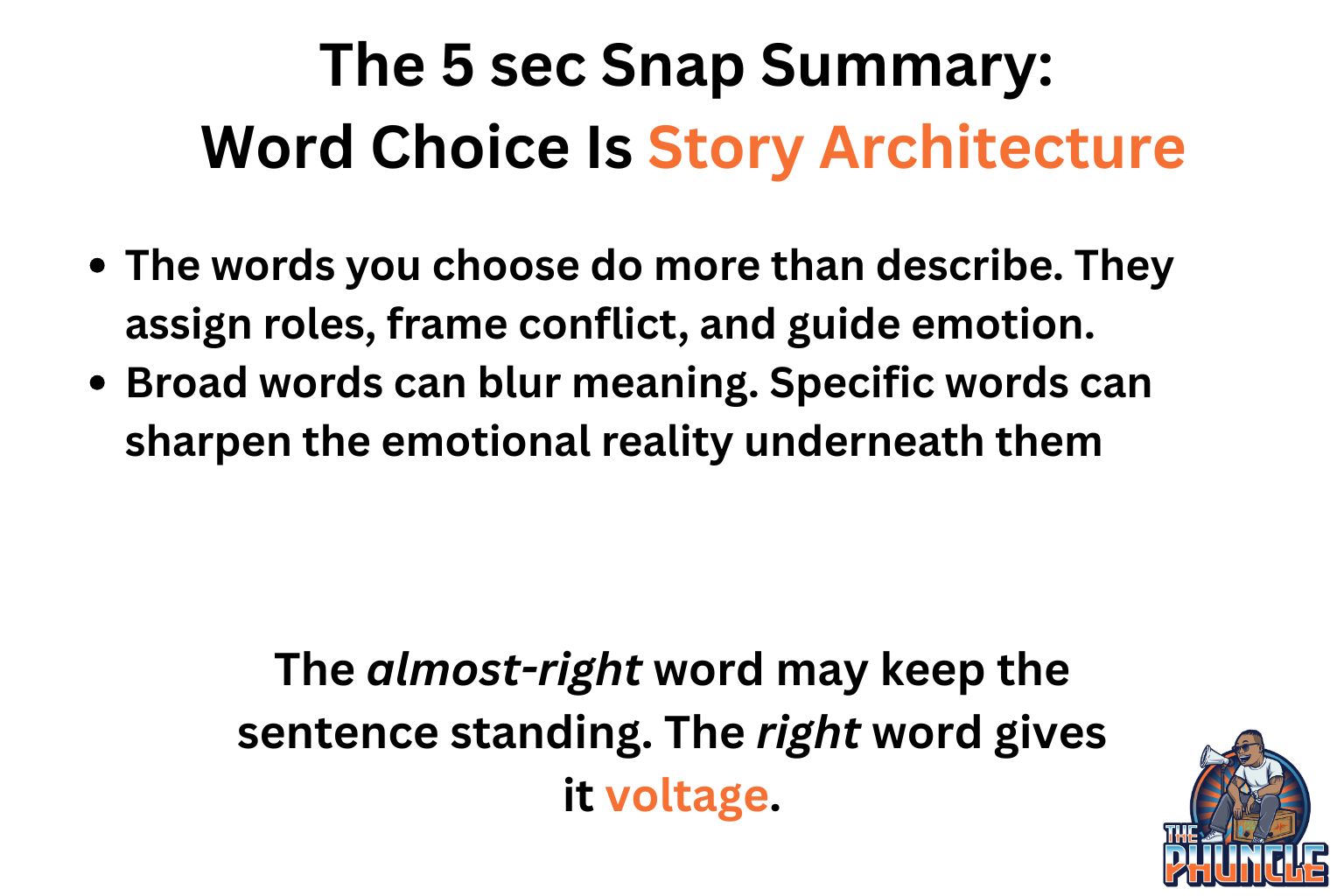
Word choice is often thought of like a garnish.
Like it’s just a few scallion greens tossed on top of the sentence, so the page looks fancy. A little parsley. A lil paprika dust. Literary plate decoration.
That’s a disservice.
Word choice is not garnish. It’s the salt, fat, acid, and heat of the story.
Because the words you choose do not just describe the story. They decide what story your audience thinks they’re in.
They tell your audience who the hero is, who the villain is, what kind of conflict they’re looking at, and whether they should admire something, fear it, grieve it, side-eye it, or push back against it.
That’s why the right word can hit like a plot twist.
And the almost-right word? That can water the whole thing down.
That’s what came to mind when I saw a post that said we should stop calling certain people “elite” and call them the “predatory class” instead.
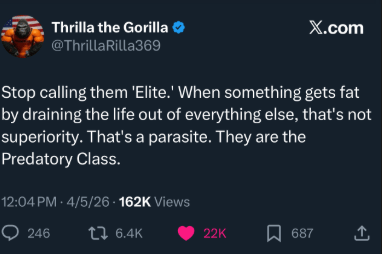
Profile photo and @ name aside, I think this was a pretty astute tweet.
Whether you agree with the exact phrasing is not even the main thing here.
The main thing is what that word swap does.
“Elite” sounds elevated. Impressive. Above the rest. It carries prestige. Status.
“Predatory class” does something completely different.
Now we’re in a story about extraction. Harm. A group feeding on what everything else needs to survive.
That is the power of word choice in your stories.
🧠 Story Science Side Note: In psychology, there’s a concept called emotional granularity, which is basically the ability to tell the difference between similar emotional states instead of dumping everything into vague buckets like “bad” or “stressed.” More precise labeling can help people respond more effectively because they understand more clearly what’s actually going on.
When your language is vague, meaning gets foggy.
Are you describing inequality, or are you describing extraction?
Are you naming a problem, or naming a pattern?
Are you calling people vulnerable, or are you naming the systems that made them less protected in the first place?
These are powerful frames in how a story will play out.
There’s this quote commonly attributed to Mark Twain(Finding the true, original quote was getting waaaaay too laborious, so this is something paraphrased.)
The difference between the almost right word and the right word is really a large matter, 'Tis the difference between the lightning bug and the lightning.
The almost-right word can keep a sentence technically correct while spiritually asleep.
But the right word?
That’s when the meaning wakes up.
📝 Message Makeover:
Before
Word choice
After
Story architecture
Words aren’t just a style choice. They’re meaning making tools.
🛠️ The PHacilitator’s Corner:
Do a Word Swap Audit.
Take one sentence you’ve written recently and underline the most important noun or adjective in it.
Then ask:
Is this the most accurate word, or just the first word?
What changes if I get more specific?
How does that change the story?
For example… Take the experience of loneliness.
It’s broad, and there’s level to that shit. Is someone feeling
distant?
isolated?
excluded?
abandoned?
These are all in the ballpark of loneliness, but these are not the same.
Some are more intense. Some reveal something different about the emotional reality and the story underneath it.
Pick a word in a story you’re telling and compare it to three alternatives. Then read each version out loud and notice how the emotional weather changes.
Because sometimes the breakthrough is not a new sentence.
It’s the right word.
From a sleep-deprived state!