- The Productive Disruptive
- Posts
- Don’t Reinvent the Wheel, Rotate the Tires
Don’t Reinvent the Wheel, Rotate the Tires
Every Tuesday, The Productive Disruptive delivers storytelling science, message makeovers, cultural commentary, and a little rebellious hope for anyone still stubborn enough to believe communication can change the world.

Dorian Johnson
November 25, 2025
Did a wise PHriend forward this to you? [Subscribe here.]
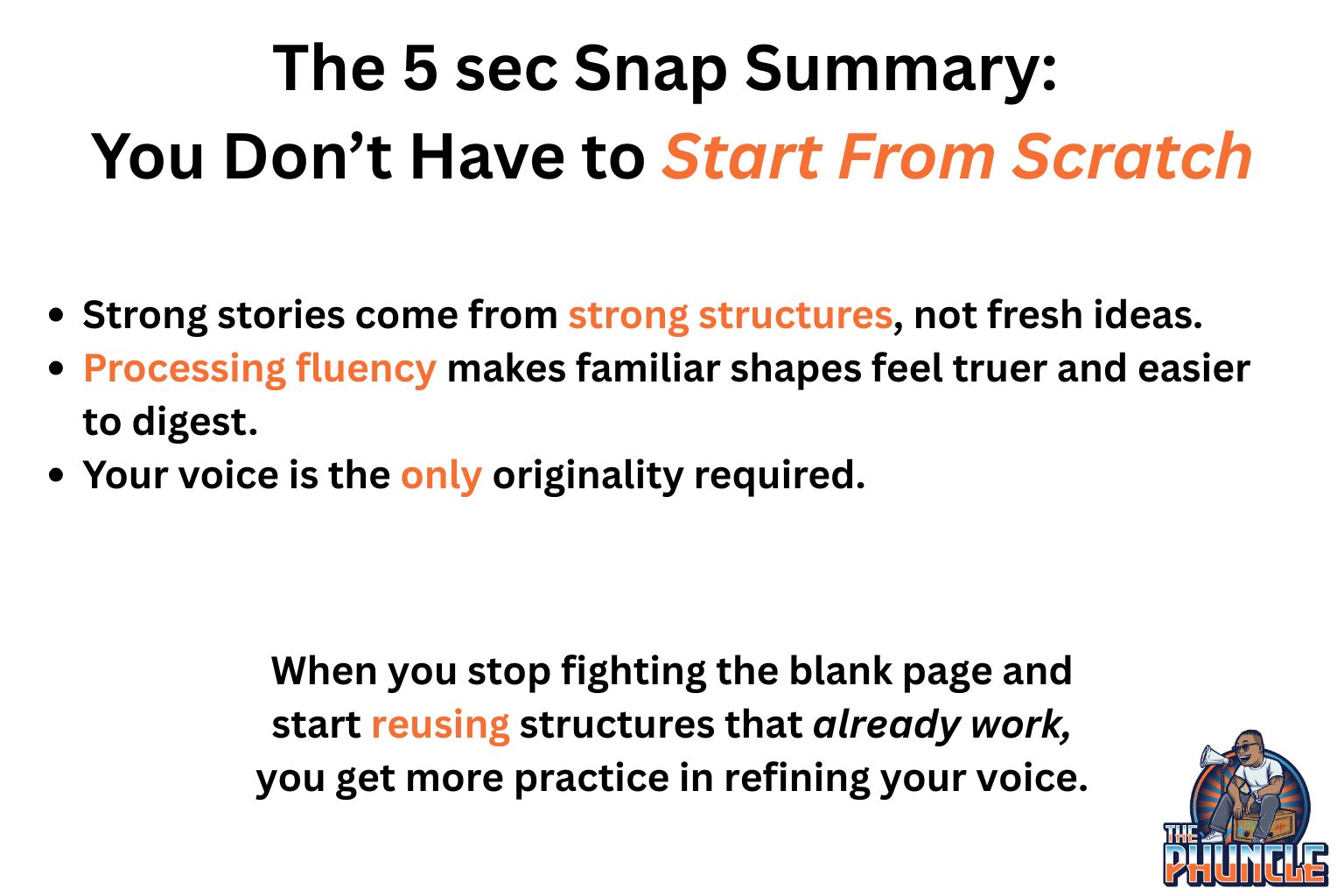
People think good storytellers wake up every day with brand-new, never-before-seen ideas.
They don’t.
The best storytellers, from authors, filmmakers, musicians, and educators, tend to reuse the same structures over and over.
They don’t start from scratch. They start from form.
Hollywood knows this.
Joseph Campbell definitely knew this. (Hero’s Journey dude).
And if we keeping it 100, your favorite movie… is probably just a remix.
And here’s the kicker: we never complain.
Why?
Because it works.
Same story.
Different spice blends.
Take a gander…
About 9 months ago, I made a post comparing public health + healthcare to legendary duos.

Other duos included Arthur and Buster, Kenan and Kel, and Hall and Oates(until, you know, they got beef)

1250 impressions on LinkedIn, 37 reactions, 5 reposts.
A week ago today(11/18/25), I posted this…

This time, I only focused on my fave duo.
Same underlying idea.
Same angle, even.
Just a fresh context, and condensed.
OutKast got inducted into the Rock & Roll Hall of Fame.
And my brain said, “Oh, this is a moment. Run that structure back.”
I didn’t reinvent the wheel.
I just rotated the tires.
This is what storytellers forget:
You’re allowed to retell stories.
You’re allowed to try again and tweak something.
Here’s something to help you build your storytelling muscle.
Once you start recognizing reused story shapes, you’ll see them everywhere.
Take LinkedIn posts…
How many times have you seen the same “advice I would give to my younger self” structure over and over?
Or, motivational content?
Remixes of the same “I struggled with x → I learned something y → here’s my wisdom of z” arc.
But here’s how it’s relevant for you:
Your voice is what makes those structures feel new.
So instead of rushing to create something original… try this:
Spend this week spotting stories you’ve seen before, and ask yourself how you would tell that same shape in your own voice.
🧠 Story Science Side Note: The Theory of Processing fluency is your brain’s way of saying, “Oh, this feels easy.”
And research shows that when something is easier to process, whether because you’ve seen the structure before, the contrast is clearer, or the pattern comes quicker, your brain automatically tags it as more true, more familiar, and more trustworthy.
📝 Message Makeover:
Old Message:
You need new ideas every time.
Makeover:
Don’t reinvent the wheel, just rotate the tires.
Same structure. New traction. Fresh mileage.
🛠️ The PHacilitator’s Corner:
Find one post, story, or idea you liked this week.
Spot the structure behind it.
Then consider a one-sentence note to yourself:
“How your voice could tell this same story.”
What’s the same? What’s different?
What’s suppressed? What’s amplified?
Oftentimes, we sound like others before we start sounding like ourselves, and that’s okay. Every chef starts by copying a recipe before adding their signature sauce.
The more you train your eye to notice these structures, the more naturally your own voice starts showing up.
And if you’d like some simple shortcuts to help you practice and finally overcome staring at a blank page, without overthinking, overlearning, or over-Googling, that’s exactly why I wrote Story Sauce.
It’s not always about adding more to your plate. You already know a lot.
Sometimes the real growth comes from implementing what’s already in you(and only you can determine if you’re doing or not).
It’s not always about giving you more to learn. You probably know a lot.
